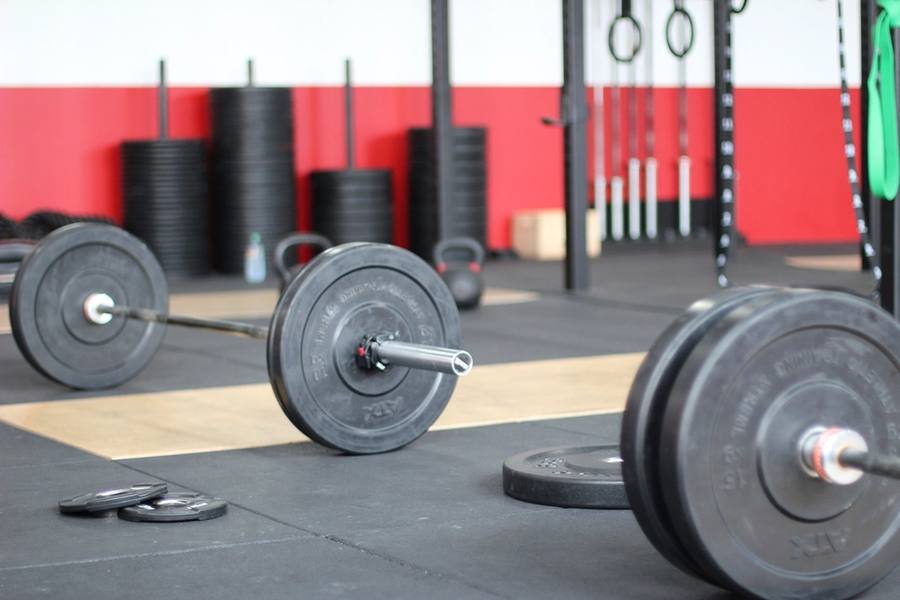
REP Fitness Black Bumper Plates
Image illustrative (photo de stock) ; ce n'est pas le produit exact.
Why Bumpers Rather Than Iron
Bumper plates are solid rubber with a steel hub, and their purpose is specific: a loaded barbell can be dropped from overhead without damaging the plates, the bar or the floor.
That is not a convenience. Olympic lifting requires dropping the bar, because lowering a snatch or a jerk under control is both unnecessary and risky, and iron plates dropped from overhead will crack, bend the bar and destroy a floor.
They also allow a failed lift to be abandoned safely, which is a genuine safety function rather than a nicety. Anyone training overhead lifts alone needs to be able to drop the bar.
All Plates Are The Same Diameter
Bumpers are made to a standard diameter regardless of weight, which means a bar loaded with light bumpers sits at the same height as one loaded with heavy plates.
That matters for technique: the bar starts at the correct height from the floor whether you are lifting a warm-up weight or a heavy one, so the movement pattern does not change as you load up.
With iron plates, light loads sit the bar lower and the pull is geometrically different, which is why lifters learning technique with iron often struggle when they move to competition-height loading.
Thickness And The Sleeve Problem
Rubber is less dense than iron, so bumper plates are considerably thicker for the same weight. That has a practical consequence people discover late: the sleeves of a barbell are only so long.
A bar loaded entirely with light bumpers runs out of sleeve space well below its maximum capacity, which is why lifters loading heavy use thin iron or steel plates on the outside once the big bumpers are on.
Anyone planning to lift heavy should factor in a few iron plates alongside bumpers rather than buying bumpers all the way up, which is both cheaper and physically necessary.
Against The Alternatives
Against iron plates, bumpers can be dropped and maintain constant diameter, and they are thicker and more expensive per kilo.
Against competition-spec bumpers with tighter weight tolerances and thinner profiles, training bumpers like these are cheaper and slightly thicker.
Against a rubber crumb plate, solid virgin rubber bumpers are more durable and less prone to the hub loosening over years.
Who Should Not Buy It
Anyone who only squats, benches and deadlifts without dropping the bar can use iron plates, which are cheaper and thinner.
Anyone loading very heavy should buy a mix, since bumpers alone run out of sleeve space.
Anyone lifting in an upstairs room should note that dropping a loaded bar transmits through a building regardless of what the plates are made of.
The Verdict
The right plates for anyone lifting overhead: droppable, constant diameter so technique does not change with load, and durable enough for years of abuse.
They are thicker than iron, more expensive per kilo, and they run out of sleeve space if you load heavy with bumpers alone.
Buy bumpers for the working weights and a few thin iron plates for the top end — that combination is cheaper and physically necessary above a certain load.
En un coup d'œil
Avantages
- Can be dropped from overhead without damage to plates, bar or floor
- Constant diameter means bar height does not change with load
- Allow a failed overhead lift to be abandoned safely
- Durable enough for years of dropping
Inconvénients
- Thicker than iron; sleeve space runs out when loading heavy
- More expensive per kilogram than iron
- Unnecessary if you never drop the bar
- Dropping still transmits noise through a building
Questions fréquemment posées
Do I need bumper plates?
If you lift overhead, yes — dropping the bar is part of snatching and jerking, and it is how you abandon a failed lift safely when training alone. If you only squat, bench and deadlift under control, iron plates are cheaper and thinner.
Why does constant diameter matter?
Because the bar starts at the same height from the floor whether the load is light or heavy, so the pull is geometrically identical as you warm up. With iron, light loads sit the bar lower and the movement pattern changes.
Will I run out of room on the bar?
Eventually, yes — rubber is less dense so bumpers are thick, and a bar loaded only with bumpers runs out of sleeve before its capacity. Buy bumpers for your working weights and a few thin iron plates for the top end.
Spécifications
| Material | Solid rubber with steel hub |
| Droppable | Yes, from overhead |
| Diameter | Constant regardless of weight |
| Thickness | Greater than iron |
| Best for | Olympic lifting and overhead work |
| Sleeve space | Limits heavy loading |
| Recommended pairing | Thin iron plates for the top end |
| Durability | High |
Résumé
Droppable, constant diameter, and durable — the right plates for overhead lifting. Thick, so buy a few thin iron plates for heavy loading.
Vérifier le prix sur Amazon