Iron Bull Strength Fabric Hip Bands

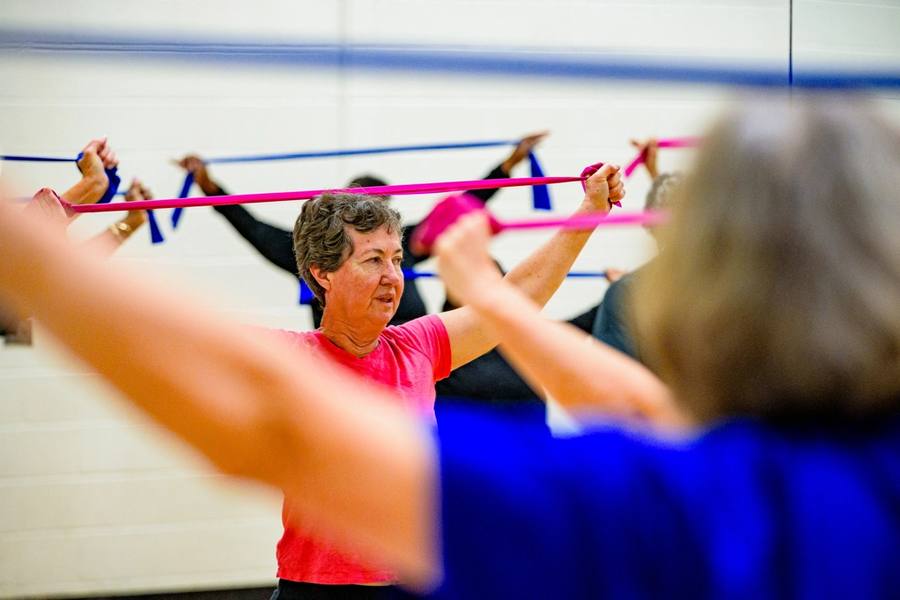
Representative image (stock photo); not the exact product.
The Problem With Latex Mini-Bands
Latex mini-bands are the standard tool for hip and glute activation work — lateral walks, monster walks, banded bridges, clamshells — and they have one persistent and genuinely annoying flaw.
They roll. A thin latex loop placed around the thighs rides up and rolls into a narrow cord within a few repetitions, which both concentrates pressure into a painful line and reduces the resistance to something ineffective.
Every set becomes an exercise in stopping to unroll the band, which is the reason so many latex mini-bands end up unused in a drawer.
Fabric Solves It
A wide fabric band with an internal elastic does not roll, because the width and the material give it enough structure to stay flat against the leg.
That single difference is the entire reason to buy these. The exercises are the same, the resistance is comparable, and the experience of doing them goes from continuously irritating to unremarkable — which is exactly what you want from equipment.
The wide surface also spreads pressure, so there is no thin line digging into the thigh, and the fabric has more grip against skin and leggings than latex does.
Resistance Behaviour
Fabric bands stretch less than latex for the same starting resistance, which means the resistance curve is flatter — the tension does not climb as steeply as you move away from the anchor point.
For hip and glute work that is generally better, because you want consistent tension through a lateral walk rather than a band that is almost slack at the start and very heavy at the end.
It also means they are less suited to anything requiring a long stretch, so they complement rather than replace latex loop bands for pull-up assistance and accommodating resistance.
Against The Alternatives
Against latex mini-bands, fabric bands do not roll and have a flatter resistance curve, and cannot stretch as far.
Against cable machines, bands are portable and cheap and provide varying rather than constant tension.
Against large loop bands, those are for pull-up assistance and barbell work and are unsuitable for hip work because they are too long and too strong.
Who Should Not Buy It
Anyone needing a long stretch — pull-up assistance or accommodating resistance on a barbell — needs latex loop bands, as fabric does not extend far enough.
Anyone happy with latex mini-bands has no reason to change, though most people are not.
Anyone expecting them to replace a full band set should buy both types, as they do different jobs.
The Verdict
A cheap solution to a specific, genuinely irritating problem: fabric bands stay flat on the thigh where latex rolls into a painful cord within a few reps.
They do not stretch far enough for pull-up assistance or barbell work, so they add to rather than replace a latex set.
If you have latex mini-bands sitting unused because they roll, this is the fix and it costs very little.
Sizing is worth a moment's thought because these are sold in sets of graded strengths and the useful ones are not evenly used. Most people work almost entirely with the light and medium bands for activation and warm-up work, and the heaviest sees very little use because hip work at that resistance is usually better loaded with a barbell instead.
At a glance
Pros
- Do not roll up the thigh, unlike latex mini-bands
- Wide surface spreads pressure with no thin line digging in
- Grip skin and leggings better than latex
- Flatter resistance curve suits lateral and hip work
Cons
- Cannot stretch far enough for pull-up assistance
- Unsuitable for accommodating resistance on a barbell
- Add to rather than replace a latex band set
- Fabric eventually loses elasticity with heavy use
Frequently asked questions
Why not just use latex mini-bands?
Because they roll up into a narrow cord within a few reps, which both hurts and reduces the resistance to nothing. That single flaw is why so many end up unused, and fabric bands solve it completely for very little money.
Can I use them for pull-up assistance?
No — fabric bands do not stretch far enough. They are for hip and glute work at short ranges, and you still need latex loop bands for pull-up assistance and accommodating resistance on a barbell.
Do they lose elasticity?
Eventually, with heavy use, the internal elastic tires and the band becomes slack. They are cheap enough that replacement is unremarkable, and they generally outlast latex mini-bands which perish as well as roll.
Specifications
| Material | Fabric with internal elastic |
| Rolling | Does not roll |
| Width | Wide; spreads pressure |
| Resistance curve | Flatter than latex |
| Best for | Hip and glute activation work |
| Unsuitable for | Pull-up assistance, barbell work |
| Grip | Good against skin and fabric |
| Washable | Generally yes |
The bottom line
Fixes the one thing latex mini-bands get wrong — rolling up the thigh — for very little money. They do not stretch far, so keep latex bands too.
Check Price on Amazon